The Ultimate Guide to Body Painting
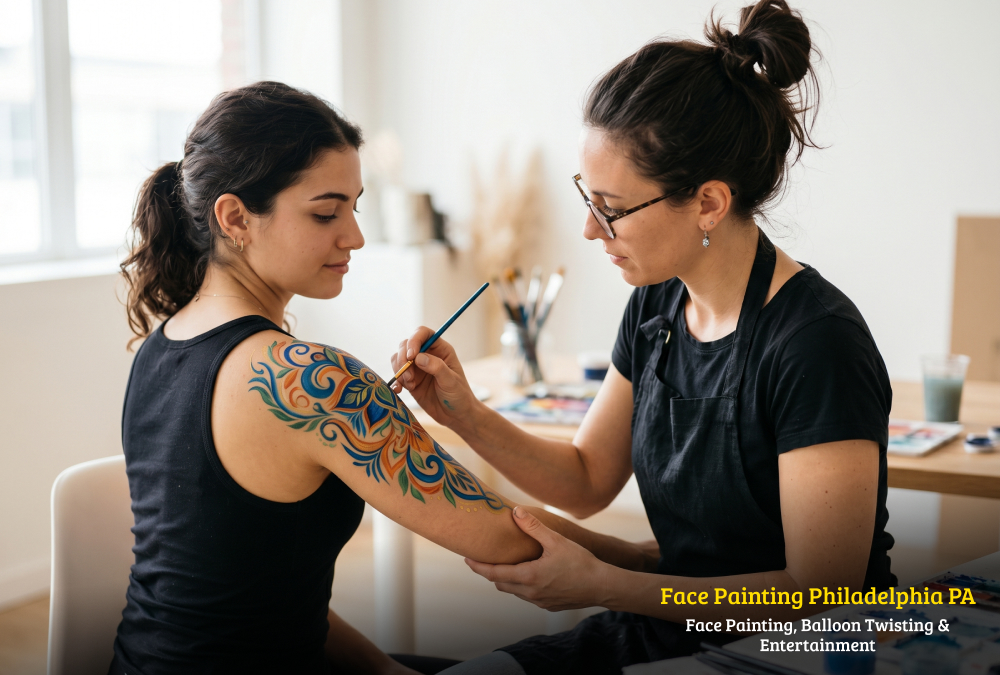
Body painting is the art of applying paint directly to human skin. It uses specialized paints that are safe for skin, such as water-based cosmetics or alcohol-activated paints. Artists use brushes, sponges, and airbrushes to create designs ranging from full-body illusions to small decorative pieces. Body painting differs from tattoos because it is temporary. Most designs last a few hours to a couple of days. Common uses include festivals, sports events, advertising, and fine art photography.
What is body painting and why do people do it
Body painting is exactly what it sounds like. You paint on skin instead of canvas. The body becomes the medium. The shapes and curves of muscles and bones become part of the design.
People do this for many reasons. Some want to express themselves artistically. Some paint for festivals like Burning Man or Carnival. Others do it for sports events. Think of fans painting their faces in team colors.
Professional body painters also work in fashion, film, and advertising. A body painted model can create an effect that clothing cannot match.
And some people just think it looks cool. That is a valid reason too.
A brief history of body painting
Body painting is not new. Humans have painted their bodies for thousands of years.
Ancient cultures used natural pigments from clay, charcoal, and plants. They painted for rituals, battles, and ceremonies. Indigenous tribes in Africa, Australia, and the Americas still practice traditional body painting today.
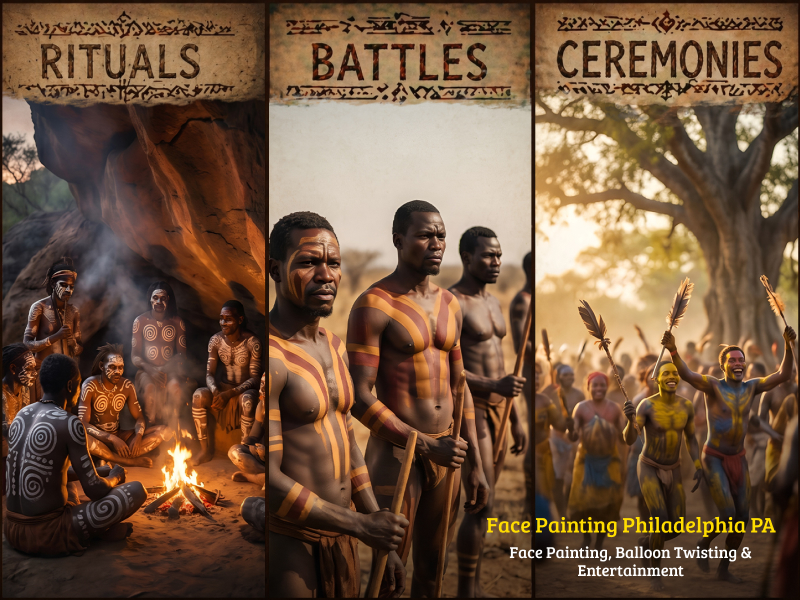
Modern body painting started in the 1960s. Artists began using airbrushes and new cosmetic paints. The first World Bodypainting Festival started in 1998. Now it is an international art form with competitions and conventions.
Types of body paint: what you need to know
Not all paint works on skin. Regular craft paint or house paint is dangerous. You need products made for human skin.
Water-based paints
These are the most common. They are non-toxic, easy to apply, and wash off with soap and water. Good for beginners and children.
Water-based paints dry quickly. But they can crack if applied too thick. Brands like Mehron, Snazaroo, and TAG are reliable.
Alcohol-activated paints
These paints are waterproof. They last longer, sometimes two to three days. Professional artists use them for events where sweat or water is a factor.
Alcohol paints need 99% isopropyl alcohol to activate. They do not wash off easily. You need soap, scrubbing, or more alcohol to remove them.
Silicone and latex paints
These create special effects. Think of zombie skin or fantasy creatures. They are thicker and can build texture.
Silicone paints are expensive. They require heat setting. Not for beginners.
Glow and UV paints
These paints glow under black light. Popular at clubs, raves, and Halloween events. Most UV paints are water-based and work like standard face paint.
Essential supplies for body painting
You do not need a studio to start. But you need the right tools.
Brushes. Flat brushes for large areas. Round brushes for details. Sponges for smooth coverage and gradients.
Airbrush system. This is for serious artists. Airbrushes create smooth, even coverage without brush strokes. The setup costs $150 to $500 for a starter kit.
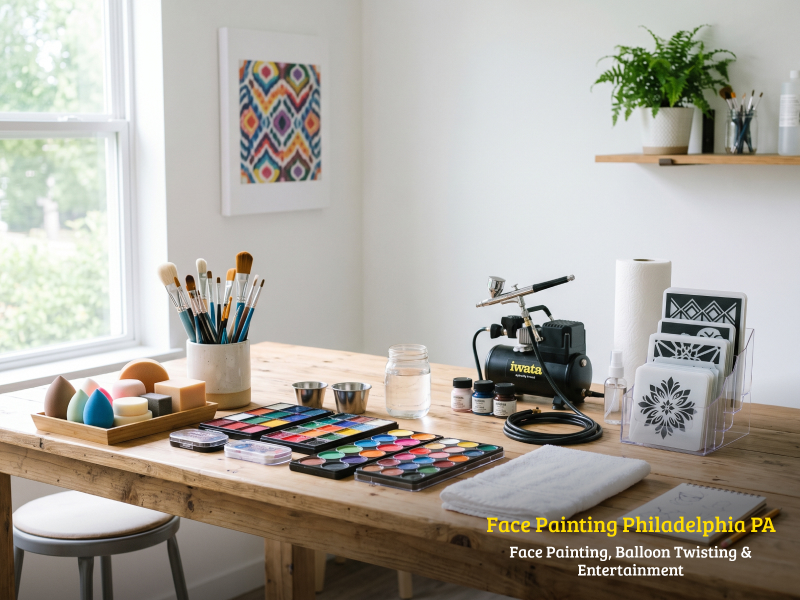
Stencils. These help create repeating patterns or complex shapes. Good for beginners who cannot freehand yet.
Setting spray or powder. This keeps paint from smudging or rubbing off. Translucent setting powder works well for water-based paints.
Removal supplies. Baby wipes, gentle soap, and a shower. Alcohol-based removers for heavy-duty paint.
Safety first: what you must know
Skin is sensitive. Putting paint on it requires caution.
Always patch test. Paint a small area on the inner arm. Wait 15 minutes. If redness or itching appears, do not use that product.
Avoid sensitive areas. Keep paint away from eyes, lips, and mucous membranes. Some body paints are not safe for those areas.
Do not use craft paint. Acrylics, tempera, and poster paint are not made for skin. They contain toxins and do not wash off easily. Some cause allergic reactions.
Watch for open wounds. Do not paint over cuts, rashes, or sunburn. The paint can irritate or infect the area.
Check for allergies. Latex and some pigment powders cause reactions. Ask models about allergies before starting.
Face Painting Philadelphia follows strict safety protocols for all events. They use only FDA-compliant, hypoallergenic paints. And they always patch test when working with new clients.
Basic techniques for beginners
Start simple. Do not try a full body tiger on your first day.
Sponging. Dip a damp sponge into paint. Dab it onto skin in a stippling motion. This creates even coverage without streaks.
Blending. Apply two colors next to each other. Use a dry brush or sponge to blend the line where they meet. This creates gradients and smooth transitions.
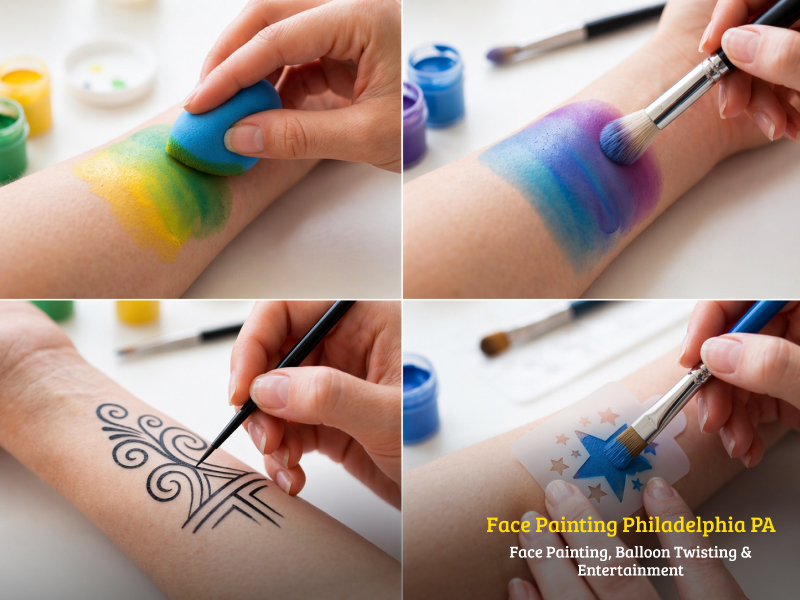
Line work. Load a round brush with slightly thinned paint. Practice steady strokes on your arm before working on others.
Stenciling. Hold a stencil flat against the skin. Sponge or airbrush over it. Remove carefully. Clean stencils between uses.
Negative space. Leave bare skin as part of the design. This is common in tribal patterns and geometric work. It saves paint and looks clean.
Full body painting: what to expect
Full body painting is a commitment. It takes hours. It requires planning and patience.
A full body design can take 3 to 8 hours depending on complexity. Two artists can work faster. But one artist working alone should expect a long session.
Models need to be comfortable. They cannot move much while you paint. They need breaks. Offer water and snacks. Keep the room warm enough for a naked or partially clothed model.
Seal the paint when finished. Use setting spray or powder. Then tell the model to avoid touching anything. Wet paint smudges. Dried paint rubs off on light colored furniture.
Removal takes time. A shower with gentle soap works for water-based paints. Alcohol-based paints need scrubbing with isopropyl alcohol or a specialized remover.
Body painting for events and festivals
This is where most body painters make money. Festivals, parades, sports games, and conventions all need painters.
Festival work. People want colorful, eye-catching designs. Rainbow patterns. Glitter. UV reactive paint. The goal is to look good in photos.
Sports events. Face and chest painting in team colors. Simple logos. Stripes. Fast work is the priority. You might paint 50 people in a few hours.
Conventions and cosplay. Character designs from movies, games, or comics. These are more detailed. Some take hours per person. Charge more for this work.
Corporate events. Body painting as entertainment at parties or product launches. Usually partial designs. Subtle or brand-focused.
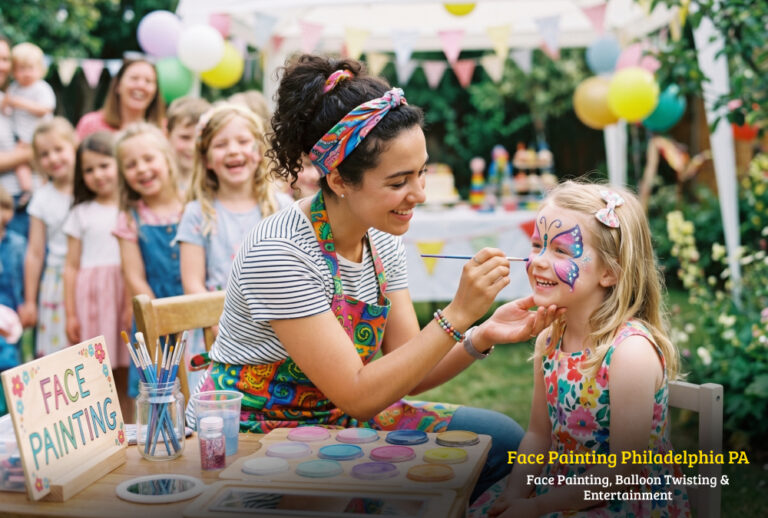
Face Painting Philadelphia specializes in event body painting. They handle everything from small birthday parties to large corporate activations. Their artists work fast without sacrificing quality.
| Paint Type | Best For | Longevity | Removal Method | Skill Level | Pros | Cons |
|---|---|---|---|---|---|---|
| Water-based | Beginners, children, quick events | A few hours to 1 day | Soap and warm water | Beginner | Non-toxic, easy to apply, washes off easily | Can crack if too thick, not waterproof |
| Alcohol-activated | Festivals, sports events, humid conditions | 2–3 days | 99% isopropyl alcohol or specialized remover | Intermediate to advanced | Waterproof, smudge-resistant, longer lasting | Requires alcohol to activate, harder to remove |
| Silicone / Latex | Special effects, prosthetics, texture work | 1–2 days (with setting) | Peel off or silicone remover | Advanced | Creates 3D texture, good for fantasy looks | Expensive, requires heat setting, not for sensitive skin |
| UV / Glow | Raves, clubs, Halloween, black light events | Same as base paint (water or alcohol) | Depends on base (soap or alcohol) | Beginner to intermediate | Glows under black light, adds excitement | Needs UV light to show effect, not visible in normal light |
Advanced techniques for experienced artists
Once you master the basics, try these.
Airbrushing. This takes practice. The airbrush sprays paint in a fine mist. You can create soft gradients and photorealistic effects. But overspray is an issue. Work in a well-ventilated area.
Muscle contouring. Use shadows and highlights to enhance or change how the body looks. You can make muscles look bigger or create illusions of clothing.
3D effects and trompe l’oeil. These designs trick the eye. A painted zipper that looks real. A hole that seems to go through the body. This requires strong drawing skills and understanding of light.
Glow effects. Layer UV paint under regular paint. Under black light, the design reveals a hidden layer. Popular for club and rave work.
Prosthetics and texture. Mix silicone or latex with paint to create raised textures. Wrinkles, scales, scars. This is closer to special effects makeup than traditional body painting.
How to photograph body painting
A great paint job needs good photos. Otherwise, no one sees your work.
Use natural light when possible. Window light or outdoor shade gives soft, even illumination.
Avoid direct flash. It creates harsh highlights and washes out colors. Use diffused studio lights if you cannot use natural light.
Shoot against neutral backgrounds. White, gray, or black. The background should not distract from the painting.
Take multiple angles. Front, back, sides, and close-ups of details. The model can turn slowly while you shoot a burst of photos.
Edit carefully. Adjust brightness and contrast. But do not oversaturate or filter heavily. Clients want to see what the paint actually looks like.
How to price your body painting work
Pricing is hard. Here is a rough guide.
- Basic face painting: $50 – $150 per hour
- Partial body (arms, chest, back): $150 – $400
- Full body simple design: $400 – $800
- Full body detailed design: $800 – $2,000+
- Festival per-person painted: $20 – $50 for small designs
Your rates depend on your skill, location, and demand. Beginners should start lower. Experienced artists can charge more.
Factor in setup time, cleanup, and travel. And always get a deposit for large jobs. Some clients cancel. You should not lose a full day of work.
Common mistakes and how to avoid them
Using too much water. Thin paint runs. It does not cover well. Mix small amounts of water into water-based paints. Do not flood the surface.
Skipping the patch test. This causes allergic reactions. Always test new products or new models.
Not sealing the paint. Unsealed paint smudges and transfers onto clothes and furniture. Always set the final design.
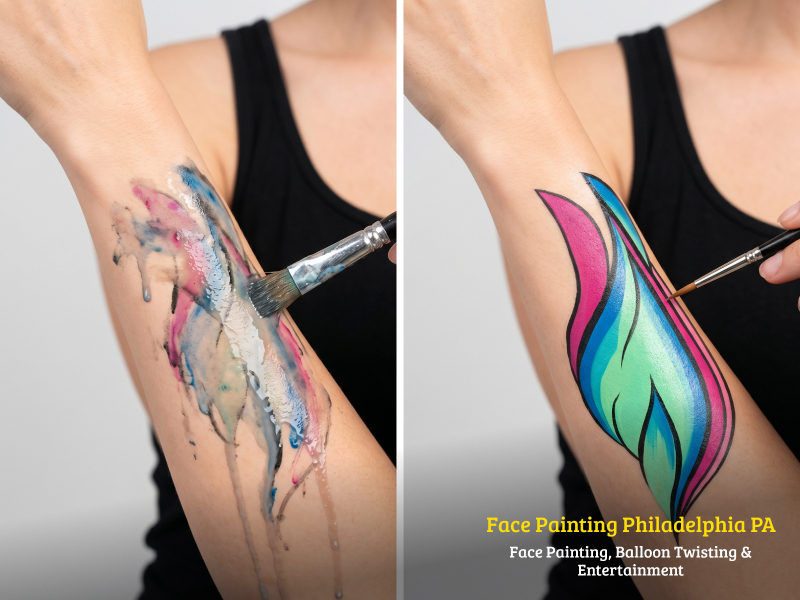
Overworking the paint. Brushing back and forth over drying paint causes streaking and peeling. Apply in smooth, even layers.
Forgetting hygiene. Clean brushes and sponges between clients. Do not double-dip into paint pots. Use separate cups for each person. Skin infections spread easily.
Is body painting right for you?
Body painting is fun. It is rewarding. But it is also physically demanding.
You will spend hours bent over. Your back and neck will hurt. You will get paint on your clothes and under your nails.
You will work with nervous models. Some will fidget. Some will complain. You need patience.
But when it works, it really works. A great design makes people happy. They take photos and they smile. They recommend you to their friends.
If that sounds good, start practicing. Paint your own arm. Paint a friend. Go to a festival and watch professionals work.
And if you want to hire someone instead of learning yourself, contact Face Painting Philadelphia. They do the hard work so you do not have to.
Final thoughts
Body painting is an ancient art that feels brand new. It combines drawing, design, and human interaction. No two paintings are the same because no two bodies are the same.
Start with simple materials. Practice safe techniques. Build your skills slowly.
You do not need expensive airbrushes to begin. A sponge, a brush, and good paint will take you far.
And remember. The best body paintings work with the body. They follow curves and they highlight movement. They respect the person underneath the paint.
That is the real art. Not just the paint on the skin. But the connection between artist and model. Get that right, and everything else follows.
Read Also: Balloon Twisting for Beginners: Fun an Easy Guide
FAQs
Q1. What type of paint is safe to use on skin?
Only water-based cosmetic paints, alcohol-activated paints, or silicone-based paints made specifically for skin are safe. Do not use craft acrylics, tempera, or poster paint. These contain toxins and can cause severe allergic reactions. Face Painting Philadelphia uses only FDA-compliant, hypoallergenic products.
Q2. How long does body painting last?
It depends on the paint. Water-based paints last a few hours to one day. They wash off with soap and water. Alcohol-activated paints are waterproof and can last two to three days with proper sealing. Sweat, friction, and clothing rubbing against the design will shorten its life.
Q3. How do you remove body paint safely?
For water-based paint, use warm water, gentle soap, and a soft washcloth. Baby wipes also work. For alcohol-activated paint, you need 99% isopropyl alcohol or a specialized body paint remover. Do not scrub hard. Soak the area first. Then wipe gently. Avoid using harsh household cleaners on skin.
Q4. Can you be allergic to body paint?
Yes. Some people react to certain pigments, preservatives, or latex in sponges. Always do a patch test before a full painting. Apply a small dot of paint to the inner arm. Wait 15 minutes. If you see redness, itching, or swelling, do not use that product on larger areas.
Q5. How much does professional body painting cost?
Prices vary by location and artist skill. Basic face painting costs 50–50–150 per hour. Partial body designs (arms, chest, or back) range from 150–150–400. A full body simple design costs 400–400–800. Highly detailed full body art can cost 800–800–2,000 or more. Always ask for a deposit before large jobs.
Q6. What is the difference between face painting and body painting?
Face painting focuses only on the face and sometimes the neck. Body painting covers larger areas like arms, legs, chest, back, or the entire body. Body painting requires more paint, more time, and more attention to how the design moves with muscles and joints.